

Borders retail center
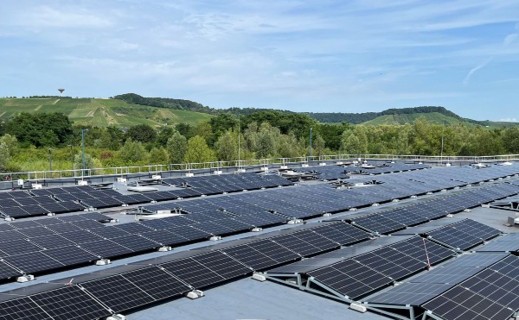
Transforming a retail asset into an energy-producing, ESG-driven revenue platform
Three strategic objectives drove the initiative:
1. Cost Management: reduce exposure to electricity price volatility;
2. Value Creation: develop an on-site energy service for tenants (e.g. food retailers such as Delhaize), strengthening the landlord–tenant relationship;
3. Regulatory & ESG Alignment: lower the building’s carbon footprint, particularly given that heating is provided by a gas boiler.
Results
◦ New recurring revenue stream (comparable to a small retail unit)
◦ Increased asset value through improved ESG performance
◦ 220 tonnes of CO₂ avoided annually
In 2024, a call for projects from the Ministère de l’Économie offered partial subsidies for self-consumption photovoltaic investments, a major opportunity to capture.
The complexity of installing 700KWc on a shopping center lies in:
◦ Business model: the business plan and ROI assumptions depend on electricity price and volume forecasts that require continuous reassessment.
◦ Business process: no established framework existed for an energy community within a multi-tenant retail center in Luxembourg
◦ Energy concept design: maximizing self-consumption requires more than PV panels: digital monitoring and storage capabilities
◦ Structure an energy community involving all retailers
◦ Implement new business processes to deliver electricity as a service.
◦ Integrate energy billing with lease invoicing.
◦ Ensure legal and operational alignment.
◦ Closely monitor cost and self-consumed volumes to secure expected returns.
1. Strategic Business Case Assessment
After financial and strategic analysis, the owner chose to invest directly and not subcontract to a third-party operator. We prepared and submitted the subsidy application, which was essential for establishing a viable business plan with a 10-year ROI projection.
2. Development of the Energy Service Model
After subsidy approval and installation coordination by a dedicated project manager, we structured the energy service, the landlord assuming the role of local electricity provider.
◦ Tenant engagement and onboarding
◦ Adaptation of lease agreements and legal documentation
◦ Electricity supply contracts
◦ Design and governance setup for the energy community
3. Operational & Financial Implementation
After commissioning, we designed the full operational management process:
◦ Data extraction from the production/consumption monitoring platform
◦ Dedicated invoicing process
◦ Reporting tools for ROI tracking and carbon footprint monitoring
Results
A fully integrated decarbonization solution combining technical, financial, legal, and operational dimensions. A blueprint replicable across retail, office, logistics portfolios and scalable for multi-tenant B2B energy communities.


One step away from your next project move. Talk to the studio.