
Low-carbon strategy for a leading real estate developer
Structuring a long-term low-carbon strategy in the built sector
Three strategic objectives drove the initiative:
1. Value creation: establish a differentiated positioning among real estate developers by embedding a carbon-neutral commitment into the Rout Lëns development and future projects
2. Regulatory & ESG Alignment: anticipate Luxembourg’s future carbon regulations for the built environment and strengthen the company’s long-term ESG credibility through a structured climate strategy
3. Cost Management: reduce electricity consumption related to technical systems and common areas, while preserving occupant comfort and operational reliability
In 2023, no official building Life Cycle Assessment (LCA) methodology existed for Luxembourg and no sectoral carbon roadmap benchmarks were available. Low-carbon construction practices were not yet mature locally and carbon reduction was perceived primarily as a cost constraint.
Define carbon reduction trajectories for 2030-2040, identify feasible building mode mixes balancing performance and cost, integrate carbon performance into design processes and implement monitoring and reporting tools.
1. Carbon strategy and business impact design
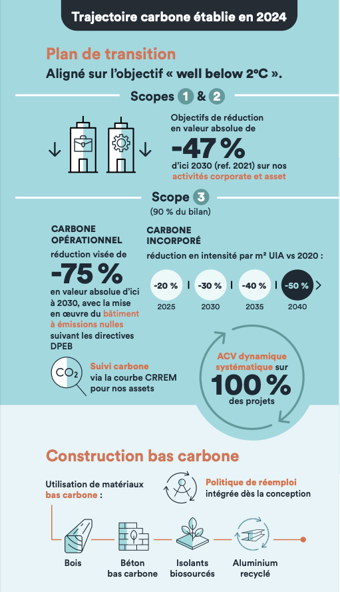
We made the methodological choice of a dynamic and Luxembourgish LCA. This defined the district-level carbon neutrality challenge and the portfolio-wide reduction scenarios.
Outcome: carbon-neutral ambition confirmed for Rout Lëns and portfolio targets set at -30% by 2030 and -50% by 2040.
Carbon objectives were translated into board-level commitments.
2. Innovation process for low-carbon building modes implementation
We empower innovation within our stakeholders in order to increase the feasibility of the chosen strategy: identify and prescribe low-carbon concrete, off-site building modes, biosourced insulation materials and material reuse.
3. LCA implementation coordination & change management
We secured implementation by integrating LCA into contracts and design processes. We led the change among the stakeholders in order to ensure shared targets and KPIs.
4. Carbon trajectory modelling & carbon reporting
We develop tools to monitor: cost impact, trajectory compliance and carbon footprint assessment
Results
A structured and financially modelled carbon trajectory achieving grounded ambitions and a blueprint for implementing carbon performance targets in the design process of any real estate developer, and among the building stakeholders, architects, engineering firms, and general contractors.

One step away from your next project move. Talk to the studio.